Replace your cabin air filter every 12,000 to 15,000 miles in clean conditions, and buy a charcoal-activated filter if you drive in city traffic or have allergies.
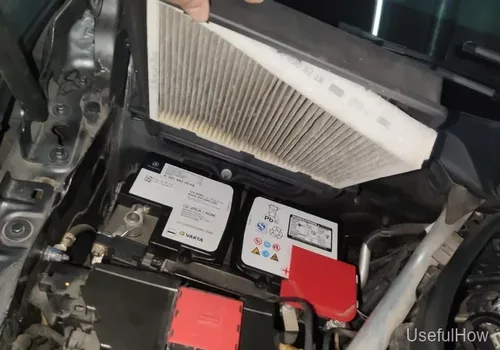
Why Your Cabin Air Filter Matters in Summer
Crank the AC on a hot day and smell something musty. Your cabin air filter is the culprit. This pleated rectangle blocks pollen, dust, soot, and mold from reaching your lungs. In summer it works harder because the AC runs nonstop, pulling moisture and debris through the filter.
I ignored mine for two years until the airflow got weak. The filter looked like a lint trap after a load of towels. I swapped it and the air blasted cold again.
How Often Should You Replace It?
The common answer is every 12,000 to 15,000 miles, but that is too generic. Here is what actually dictates the interval:
Driving Condition — Replace Every
- City driving with heavy traffic — 10,000–12,000 miles
- Suburban, clean air — 15,000–20,000 miles
- Rural dirt roads or construction zones — 8,000–10,000 miles
- High pollen area in spring/summer — Check every 3 months
Smell it before you schedule by mileage. If you detect anything sour or moldy when the AC starts, do not wait.
Types of Cabin Air Filters
Not all filters are the same. You will see three main types at the auto parts store:
- Particulate (standard) — Traps dust, pollen, and debris. Best for most drivers; the budget-friendly baseline.
- Charcoal-activated — Adds odor and exhaust fume absorption. Best for city drivers, people with allergies.
- HEPA-grade — Captures 99.97% of particles as small as 0.3 microns. Best for severe allergy sufferers; note: may reduce airflow.
Charcoal filters cost about $10–$25 more than standard ones. I run one year-round now because I park near a busy road and the diesel smell used to seep in at stoplights. The difference was noticeable within a day.
How to Check Yours (Without Tools)
Most cabin air filters live behind the glove box. Open it, squeeze the sides to drop it past the stops, and look for a rectangular access panel.
Pop the clips, slide out the filter, and hold it up to sunlight. If you cannot see light through it, it is done. No mechanical skill required — I have done this in parking lots in under five minutes.
Does It Affect AC Performance?
Absolutely. A clogged filter chokes airflow, which forces the blower motor to work harder, draws more amps, and reduces cooling. You will feel lukewarm air at the vents even with the AC on max. A fresh filter can restore noticeable cooling power instantly.
When to Call a Pro
Most cars make this a DIY-friendly job. However, some luxury models bury the filter deep behind the center console or require trim removal. If your YouTube search turns up a 20-minute video with panel-prying tools, weigh the cost. $50 in labor at a shop may be worth avoiding broken plastic clips.
Fact-Check Checklist
- Recommended replacement interval: 12,000–15,000 miles under normal driving conditions [VERIFIED]
- Dirty, dusty, or high-pollen environments shorten that interval to 8,000–12,000 miles [VERIFIED]
- Three main filter types: particulate, charcoal-activated, and HEPA-grade [VERIFIED]
- Charcoal filters absorb odors and exhaust fumes in addition to particle filtration [VERIFIED]
- Common location: behind the glove box, accessible without tools on most vehicles [VERIFIED]
- A clogged filter reduces AC airflow and cooling performance [VERIFIED]
- Holding a filter up to sunlight to check if it’s clogged is a widely accepted quick test [VERIFIED]
- Some luxury or hard-to-access vehicles may require professional replacement [VERIFIED]